

The Effectiveness of Rehabilitation for Cognitive Deficits
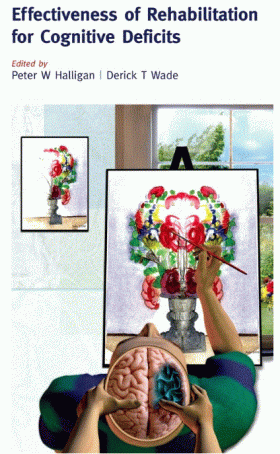
Many patients with brain damage are left with a range of neuropsychological deficits that impair normal cognitive process. It is generally recognised that these less obvious cognitive deficits (including memory, language, perception, attention, and executive disorders) militate against full recovery often to a greater extent than more traditional medical deficits (e.g. paralysis, sensory loss, etc.). Recognition of this has helped fuel the exponential growth in cognitive neuropsychology and neuroscience over the past thirty years. In turn, this theoretical approach has been used to guide and inform the development of cognitive therapies designed to remediate cognitive impairments and their functional consequences. Cognitive rehabilitation has over the last decade grown to become an established and influential therapeutic approach. There is now a considerable body of knowledge describing the principles and theoretical basis for analysing and directing treatments to selective cognitive deficits. Despite this, the clinical effectiveness and extent to which cognitive theory can inform therapeutic treatment has been questioned. It is timely, therefore, to evaluate and discuss the type and quality of evidence used in support of cognitive rehabilitation.
Información bibliográfica
Año publicación:
2005
Editorial / colección:
Oxford University Press, 2005
Tipo de documento:
Libro
Idioma documento:
Inglés
Páginas:
397
ISBN-10:
198526547
ISBN-13:
9780198526544
